The CFTC’S New Crypto Market Rules
Explore the CFTC’s proposed crypto market rules and what they could mean for employee trading, conflicts of interest, MNPI oversight, and compliance teams managing new digital asset risks.

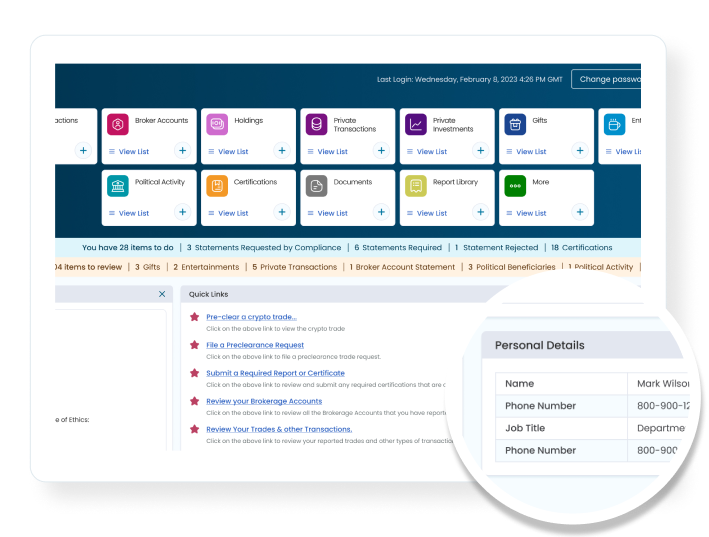
Simplify the declaration of private investments. StarCompliance Enterprise lets employees quickly and easily declare their non-publicly traded investments, ensuring you stay in the know from day one.



Ensure employee trading and investments meet all regulatory and internal policy requirements.

Gain comprehensive pre-clearance and post-trade oversight across 35+ exchanges, 30+ blockchains, 200+ tokens.
Simplify declarations for employees holding non-publicly traded investments.

Track and report gifts and hospitality—given or received—to stay compliant with anti-bribery regulations.

Easily capture and manage employee disclosures for external business engagements.

Enforce pay-to-play thresholds and minimize employee-related risk with purpose-built monitoring and controls.

Monitor employee trading against market activity and public news to detect potential insider risks.
You can also create rules with the following STAR products:
Personal Account Dealing, Gifts & Hospitality, Political Donations & Activities

You can also survey with the following STAR products:
Personal Account Dealing, Gifts & Hospitality, Political Donations & Activities
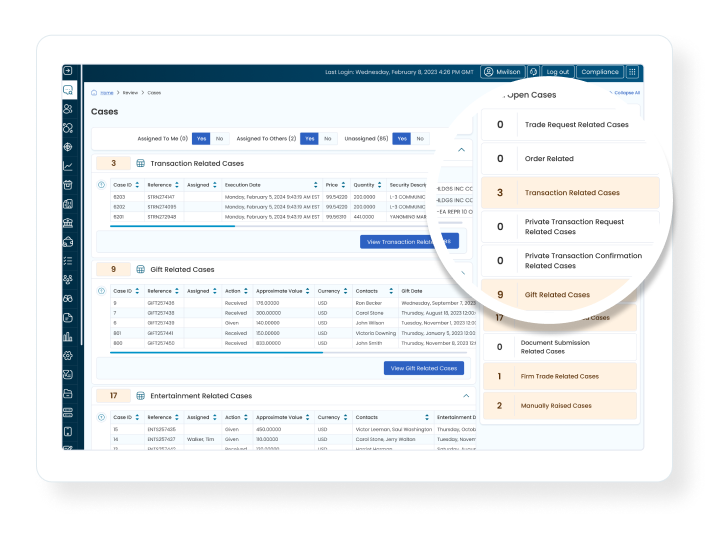
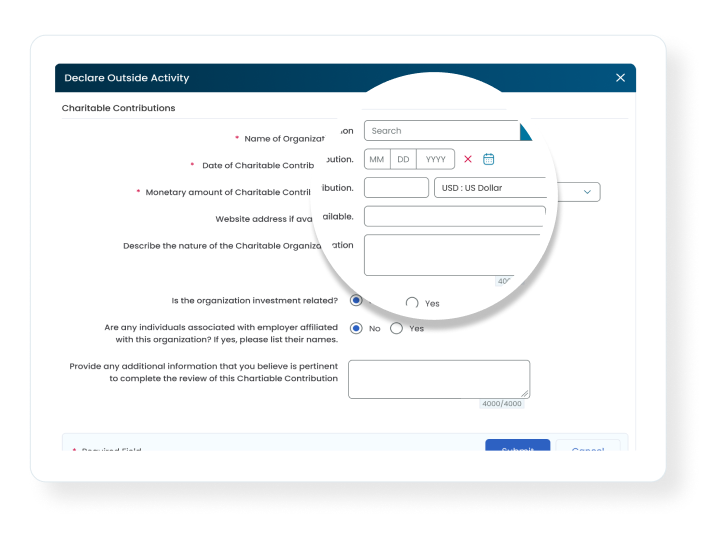
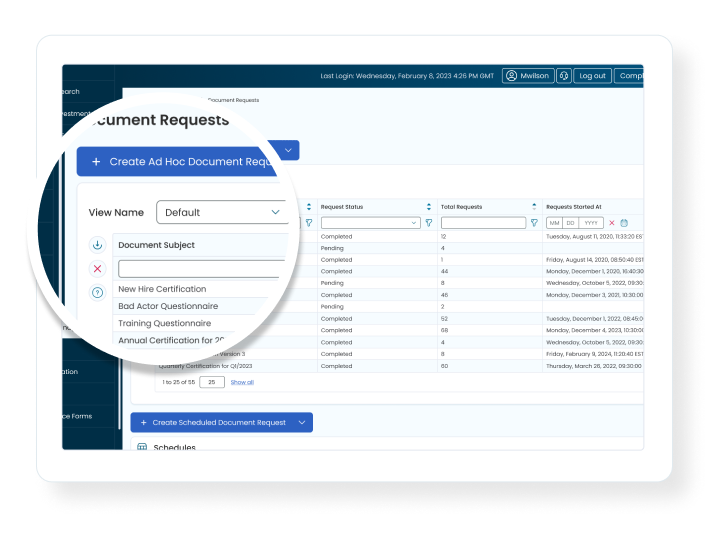






Extensive workflows are highly configurable, powered by conditional logic.

Tailor time zone, currency, language, and more for global employees.

Drive employee adoption with ease and simplify employee access via standard authentication and/or single sign-on.

Quickly and easily get real-time analytics through customizable dashboards and reports.

Safeguard sensitive data with multi-layered access rights based on division, department, role, location, and more.

Gain a 360-degree view of your employee compliance anywhere with scalable, cloud-ready software and integrations with Snowflake, Thoughtspot, and PowerBI.

Explore the CFTC’s proposed crypto market rules and what they could mean for employee trading, conflicts of interest, MNPI oversight, and compliance teams managing new digital asset risks.
Explore the SEC’s 2027 Examination Priorities, key regulatory focus areas, emerging risks, and how firms can strengthen compliance oversight and prepare for evolving expectations.
The shift toward 23-hour trading is challenging traditional compliance boundaries and requiring firms to rethink how policies, pre-clearance, surveillance, and controls operate in an increasingly always-on market.