
SMCR’s Next Chapter: What the FCA Changes Mean for Firms
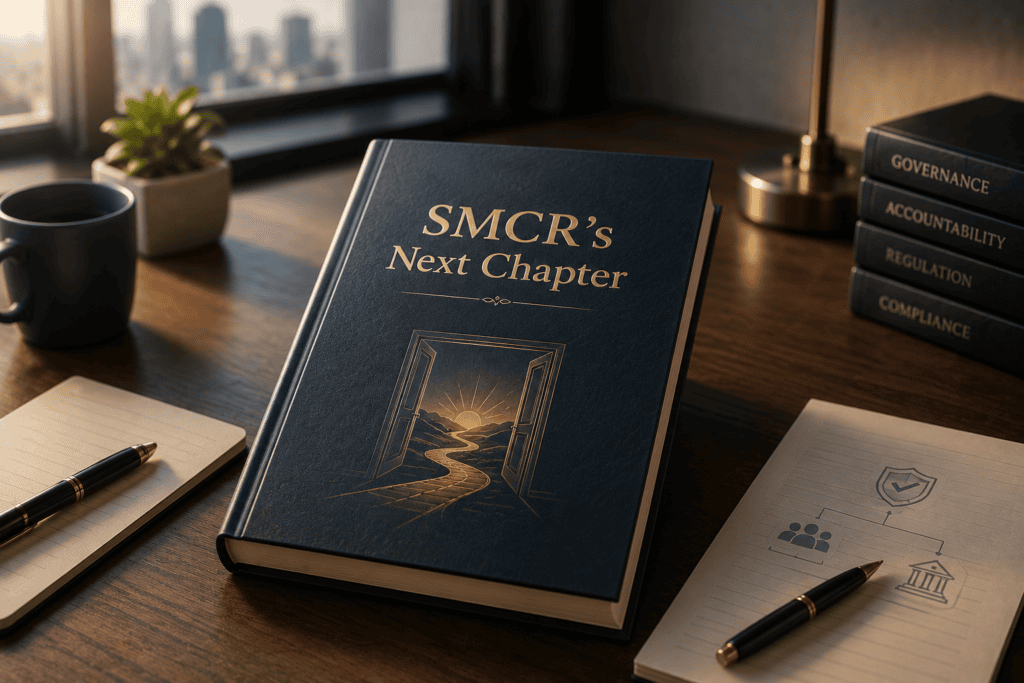
The latest reforms introduce operational flexibility, but firms must still maintain strong accountability and governance controls.
The UK’s Senior Managers and Certification Regime (SMCR) is entering a new phase. Following the FCA’s recently announced Phase 1 reforms, firms now have greater clarity around how regulators plan to streamline parts of the regime while preserving its core purpose: strengthening accountability and governance across financial services.
While the direction of travel is becoming clearer, broader reforms remain under review and could still take years to materialise. In the meantime, firms must continue operating under today’s framework and meet the same expectations around oversight, documentation, and reasonable steps.
Where We Stand Today
The Phase 1 reforms focus on operational efficiencies within the existing legislative framework. The objective is to reduce duplication, clarify expectations, and improve flexibility without weakening regulatory standards.
Most changes came into effect on 24 April 2026, with additional updates scheduled for 10 July 2026 and 1 September 2026. The September changes specifically address non-financial misconduct in financial services.
Key Phase 1 updates include:
- Streamlined certification processes for individuals with overlapping responsibilities
- Clearer guidance on conduct breaches and regulatory references
- More flexibility around Statements of Responsibilities and FCA Directory submissions
- Operational changes intended to reduce administrative burden
While these updates may simplify certain workflows, the underlying obligations remain unchanged.
Accountability Expectations Remain Firmly in Place
Firms are still expected to maintain accurate data, structured governance, and defensible oversight processes.
Responsibility Maps and Statements of Responsibilities must continue operating as living documents. Certification and Fitness & Propriety records still need to be accurate, documented, and auditable. Conduct Rule monitoring, breach tracking, training oversight, and evidence of reasonable steps remain core expectations.
Greater flexibility around submissions does not reduce the need for reliable systems of record. If anything, it increases the importance of having centralised data and structured processes capable of supporting regulatory scrutiny when needed.
Larger Structural Changes May Still Come
Beyond the operational reforms already announced, Phase 2 discussions continue around broader structural changes to SMCR that would require HM Treasury legislation.
Potential future reforms include:
- Fewer roles requiring regulatory pre-approval
- Redesign or removal of the Certification Regime
- Replacement of the FCA Directory with a more streamlined alternative
However, these changes are unlikely to arrive quickly, with mid-2027 currently viewed as the earliest realistic timeline.
That means firms will continue operating under the current framework for the foreseeable future, leaving firms that rely on manual processes, fragmented documentation, or inconsistent governance exposed to ongoing operational and regulatory risk.
How StarCompliance Supports Firms Through SMCR Evolution
As regulations continue to evolve, StarCompliance (Star) remains focused on helping firms simplify complexity, maintain reliable systems of record, and stay aligned with regulatory expectations.
While the latest reforms may introduce more flexibility, the need for accurate data, clear accountability, and defensible oversight remains unchanged.
Star’s SMCR capabilities help firms:
- Centralise certification and Fitness & Propriety records
- Maintain Responsibility Maps and Statements of Responsibilities
- Support conduct breach documentation and regulatory references
- Align data with FCA submission formats
- Automate workflows for attestations, training, and breach tracking
- Maintain defensible audit trails and oversight documentation
In addition to SMCR, Star’s Individual Accountability capabilities also support frameworks such as Ireland’s IAF, Singapore’s IAC, and Australia’s FAR.
SMCR may be evolving, but the need for strong accountability frameworks and purpose-built compliance technology remains constant. Firms that invest now in centralised oversight, automation, and scalable governance processes will be better positioned to adapt confidently as additional reforms emerge.
To learn more about how Star supports firms with SMCR and broader Individual Accountability obligations, click [HERE].
WEBINAR
SMCR and Individual Accountability
Join industry leaders and StarCompliance Product Director, Barbara Delaney, for a practical discussion on what the latest SMCR changes mean for firms today, what may still lie ahead, and how compliance teams can prepare for the future of individual accountability regulation.