3 Steps For Compliance Teams To Prepare For Crypto Regulation Now

Cryptocurrency compliance is complicated but not impossible. Here’s how to account for crypto regulation in existing compliance frameworks
Cryptocurrencies and other formerly niche digital assets have gained massive momentum in the past few years, and in many eyes they’ve entered the mainstream. In fact, a heated Senate debate over proposed cryptocurrency regulation delayed a $1.2 trillion infrastructure bill, demonstrating just how crucial cryptocurrency is becoming to financial services overall.
Traditional banks might be late to the cryptocurrency space, but you can bet they’re scrambling to get a piece of the pie. At its IPO, the Coinbase cryptocurrency exchange was commanding an $86 billion valuation (though it’s less than that now) and the publicly traded Robinhood exchange noted in its first earnings report that 41% of its $565 million in revenue came from commissions on cryptocurrency trading.
As banks move to incorporate digital assets into their products and services, their employees are undoubtedly experimenting with these assets as well, creating a challenging situation for compliance and risk-management teams.
The Complicated Nature of Crypto Compliance
Why is cryptocurrency compliance particularly challenging for financial institutions? For one, cryptocurrency trading doesn’t have the settlement cycle that accompanies the traditional securities exchange by financial industry members. For instance, stocks might have a T+2 settlement date for bank employees, making it more difficult for them to time their trades according to the release of material nonpublic information, or MNPI. In contrast, cryptocurrencies such as Bitcoin were designed around decentralized finance, or DeFi, and traders can buy or sell cryptocurrencies in minutes from their phones.
One other characteristic of DeFi is a fragmented market, and different exchanges might have different bid and ask prices for a given currency. This lack of uniformity means many traders actively participate in various exchanges, making their activity more difficult to monitor. Cryptocurrency regulation is highly complex, but it will only become more necessary as it proliferates among traders.
The Current State of Crypto Regulation
In the UK, one of regulators’ biggest priorities is eliminating the possibility of money laundering and fraud with cryptocurrencies. As such, they require any business offering services in the DeFi space to comply with anti-money-laundering legislation. So far, that’s prompted many organizations to withdraw their applications to register with the Financial Conduct Authority.
In the US, a broad regulatory framework is still a long way off. Still, the SEC and FINRA require institutions with services related to cryptocurrency to acknowledge fiduciary responsibilities and other obligations. It’s an early step in what will no doubt be a major push for a compliance framework that governs how firms should protect their cryptocurrency investors. To put your organization in the best possible position when that effort bears fruit, follow these three steps:
1. Get Up to Speed
The cryptocurrency market is still maturing and gaining mainstream adoption. It’s also complex and nuanced. Even financial services employees who consider themselves well-versed in the space can benefit from some education on the subject—especially compliance teams, who will need a deep understanding of the technologies underpinning DeFi and various cryptocurrency assets. Bring in third-party educators to share cryptocurrency expertise and ensure everyone has a firm foundation of knowledge.
2. Assess Your Organization’s Current DeFi Position
Take an honest look at your firm’s current ability to maintain cryptocurrency compliance, and identify where new tools or strategies might be needed. Even a simple process—like an online form for employee trade requests—can lay the foundation for stronger systems as the crypto space evolves.
As you assess your organization’s position, consider these key questions:
- Are employees clear on expectations?
- Do you have the tools to track digital asset activity effectively?
- Are you up to date with crypto laws and regulations?
- Is there a risk plan in place if something goes wrong?
3. Embrace a Continuous Approach to Compliance
If the speed at which the market has been growing is any indicator, the cryptocurrency space will likely change quickly and with little warning. Like other compliance processes and procedures, your policies around cryptocurrency regulation will need to stay flexible and adaptable. You must be prepared to pivot as cryptocurrency compliance issues garner increased attention and new SEC regulations take hold in response. Take a future-looking approach and outline potential scenarios now to help your firm craft informed reactions later.
The world of cryptocurrency compliance will continue to evolve in the coming years as more consumers increase exposure and financial institutions rush to keep up. As the situation unfolds, compliance teams must stay up to speed on cryptocurrencies, stay aware of where their organizations stand, and be ready to undertake a process of continuous assessment and improvement to produce a more prepared compliance posture.
Take a look at these articles as you prepare for crypto regulations:
FDIC & OCC Clear a Path for Bank Crypto Activity
Learn about how the FDIC and OCC have eased restrictions, allowing banks to engage in crypto activities without prior approval.
Top Takeaways From The Star Crypto & Compliance Webinar
Discover how financial firms can navigate cryptocurrency and cryptosecurity compliance, address policies, monitor practices, and stay current with regulatory guidance.
Deciphering Crypto Compliance in 2025
Navigate the rapidly evolving global digital asset landscape with the latest regulatory updates, industry challenges, and best practices for compliance.
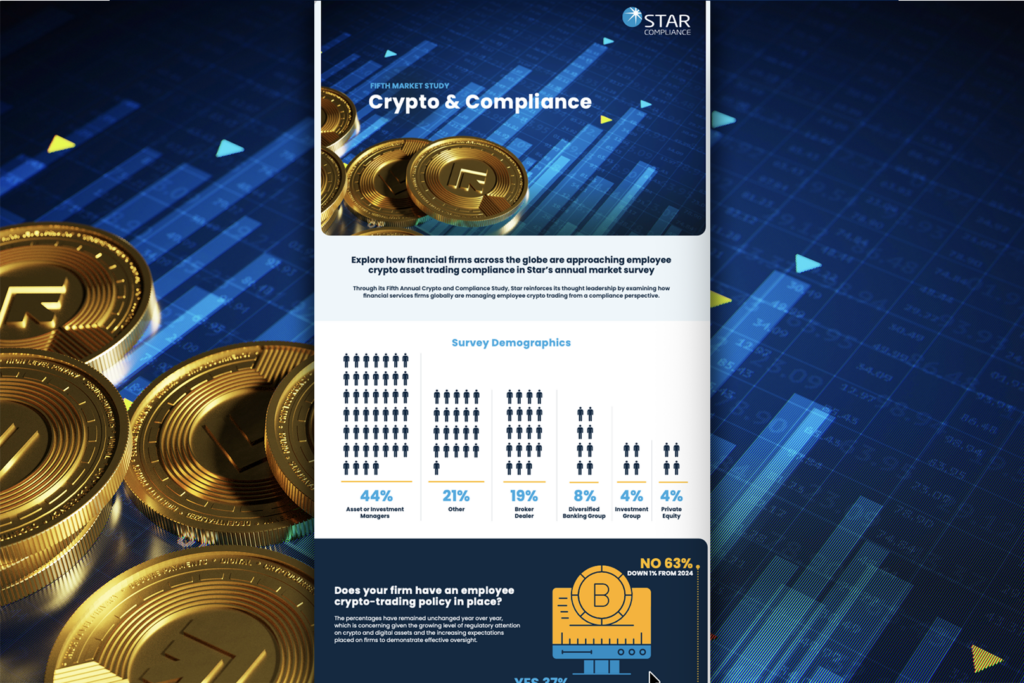
Fifth Annual Crypto & Compliance Study
The preparedness gap is widening. If you believe your crypto risk is under control, this data will either validate that confidence — or expose where risk is building.