
Growing Without Losing Control

Four Lessons from Industry Leaders on Building Compliance That Scales
One of the most interesting conversations I’ve had recently was an International Compliance Association (ICA) panel discussion on Scaling Compliance Maturity: Where You Are Now and What Comes Next.
I had the pleasure of joining Sara Cass, Chief Risk and Compliance Officer at IFX Payments, and Joel Cook, Deputy Regional Chief Compliance Officer, Asia Pacific Region at SMBC Group, for a discussion moderated by Jonathan Bowdler, Head of Postgraduate Courses at the ICA.
How do you build a compliance function that can keep up with a business that refuses to stand still?
That question sat at the center of this discussion panel, and it quickly became clear that scaling compliance is about far more than adding people or implementing new technology.
But the conversation quickly moved beyond frameworks and controls. What emerged was something broader. Compliance maturity isn’t just about adding people, implementing technology, or checking regulatory boxes. It’s about building a function that evolves alongside the business and earns the trust required to influence strategic decisions.
At StarCompliance (Star), we know there is no universal formula for maturity. Every organization has different risks, priorities, and ambitions. Yet several common themes emerged that are relevant to firms at every stage of growth.
1. Growth Doesn’t Wait and Neither Can Compliance
One message came through loud and clear: compliance maturity is not a destination.
As organizations expand into new markets, launch new products, and increase transaction volumes, yesterday’s operating model may no longer be sufficient. Effective compliance functions continuously reassess whether their governance structures, controls, and processes remain aligned with the business they support.
Growth creates complexity. Maturity means staying ahead of it.
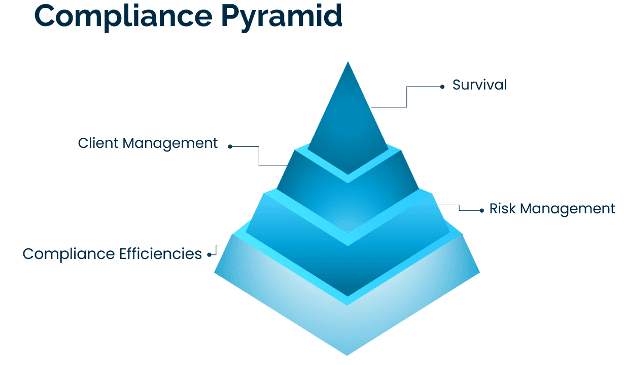
The key to any organization, including Compliance, is Survival. In order to survive, Compliance must successfully manage and survive regulatory exams and audits.
A key to doing this is through internal Client Management. This means knowing the organization, the business and the people.
By doing so, this helps with Risk Management. If one understands the business, then they can determine the applicable rules and regulations. If one understands the rules and regulations, they can design Compliance Programs.
Once Compliance Programs are designed they can be amended and fine-tuned to achieve Compliance Efficiencies.
Organizations that scale most successfully are not waiting for today’s framework to break. They are preparing for tomorrow’s challenges before they arrive.
2. Influence Is Built Influence Is Built, Not Granted – Compliance Management
echnology matters. Policies matter. Controls matter. But relationships matter just as much – thus Compliance Management.
The discussion repeatedly returned to a simple truth: compliance is most effective when it is viewed as a trusted partner rather than an obstacle. That trust is built by understanding the business, solving problems, and demonstrating that compliance exists to enable responsible growth.
Sometimes that starts with something as simple as walking the halls, sitting down with internal stakeholders, and taking the time to understand what keeps them up at night.
Seats at the table are not granted automatically. They are earned through credibility, collaboration, and consistently finding ways to support the business while managing risk.
3. Great Compliance Leaders Speak the Language of Growth – Risk Management
Compliance leaders increasingly compete for resources alongside every other business function.
That means risk discussions cannot stop at regulations and policy requirements. Leaders need to translate risk into outcomes executives understand: financial consequences, operational impact, and business opportunity – thus Risk Management.
When controls work well, they create value. When they fail, the consequences can be costly.
The strongest compliance leaders frame both sides of that equation.
Equally important, they ensure their functions are built not only for steady-state operations but also for periods of rapid growth and unexpected surges in activity. Compliance should never become the bottleneck that prevents the business from seizing opportunities.
4. Scale Requires More Than Headcount – Compliance Efficiencies
Adding people alone is not a long-term growth strategy.
Technology, automation, and strong professional networks are increasingly becoming force multipliers for modern compliance teams. Close partnerships with technology teams help organizations experiment with new capabilities and identify solutions that improve efficiency without sacrificing oversight – thus Compliance Efficiencies.
At the same time, there is enormous value in learning from peers. Chances are, someone else has already encountered the challenge you’re facing.
Perhaps the most encouraging takeaway from the discussion was this: no organization has to navigate change alone.
The Star Partnership – Growing with the Business
As firms navigate increasing complexity and evolving regulatory expectations, scalable technology and expert guidance are becoming essential. Whether addressing employee conflicts of interest, personal trading, information barriers, insider risk, or broader governance challenges, organizations can connect with Star to learn how integrated solutions can help strengthen both firm and employee regulatory compliance programs. Click [HERE] to schedule a demo.